The Influence of Audio Design Elements on Session Duration Patterns in Interactive Slot Interfaces
Written by Ulrich Long · Oct 4, 2026
The Influence of Audio Design Elements on Session Duration Patterns in Interactive Slot Interfaces
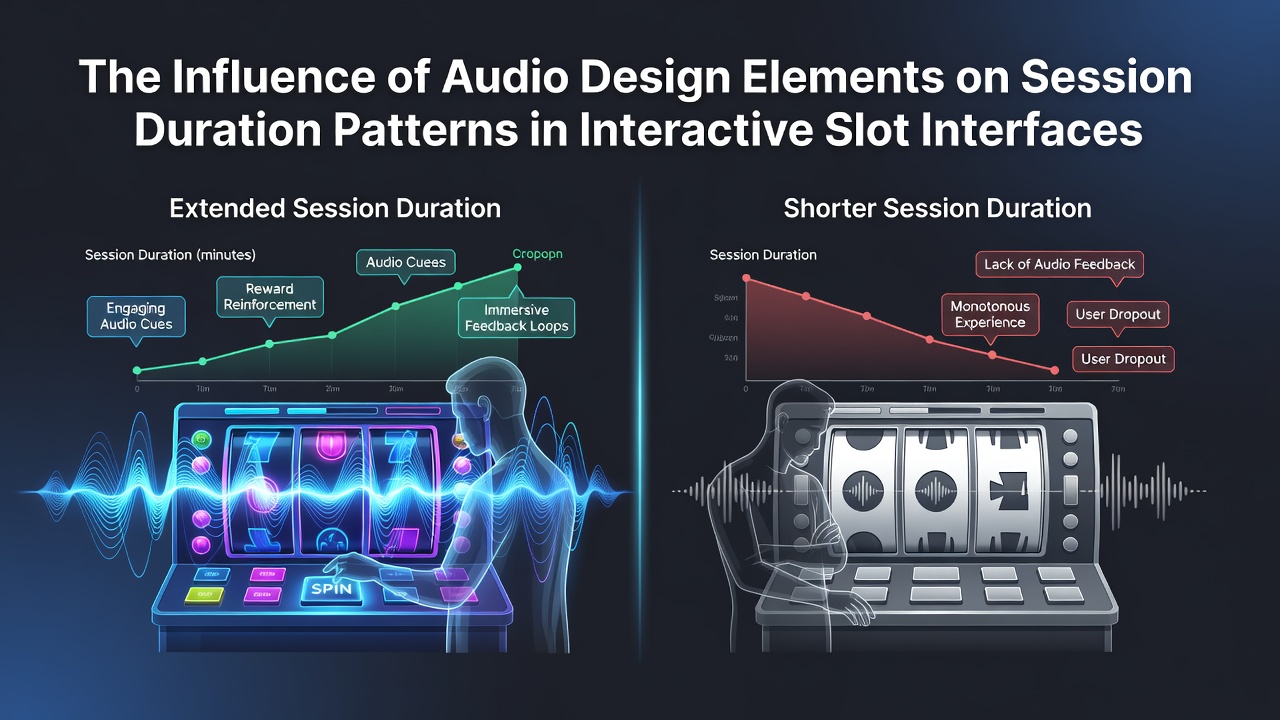
Interactive slot interfaces rely on layered audio components that include reel spins, win chimes, and ambient tracks to guide user attention across repeated plays. Researchers tracking mobile and desktop platforms note that these elements align with measurable shifts in how long sessions last when compared against silent or muted baselines. Data from platform analytics collected through 2025 shows consistent patterns where certain frequency ranges and rhythmic cues extend average play intervals by measurable margins.
Core Audio Components in Slot Systems
Slot interfaces deploy distinct audio layers that operate simultaneously, with mechanical clicks for symbol stops, escalating tones during bonus triggers, and looped melodies that adjust in intensity based on bet size. Engineers design these layers to synchronize with visual animations so the combined output creates predictable feedback loops. Studies conducted by academic teams at institutions including the University of Nevada Reno indicate that win-associated sounds in the 800-1200 Hz range correlate with longer dwell times on individual machines because they trigger immediate auditory reward responses without requiring visual confirmation alone.
Background music varies across titles, ranging from low-tempo electronic loops to orchestral swells that build during feature rounds. Platform operators adjust volume curves and pitch modulation in real time through server-side parameters, which allows testing of session length changes when music tempo increases by 10-15 beats per minute. Observers tracking these adjustments report that faster tempos often coincide with higher spin rates per minute while slower tempos pair with extended pauses between spins.
Measured Effects on Session Length
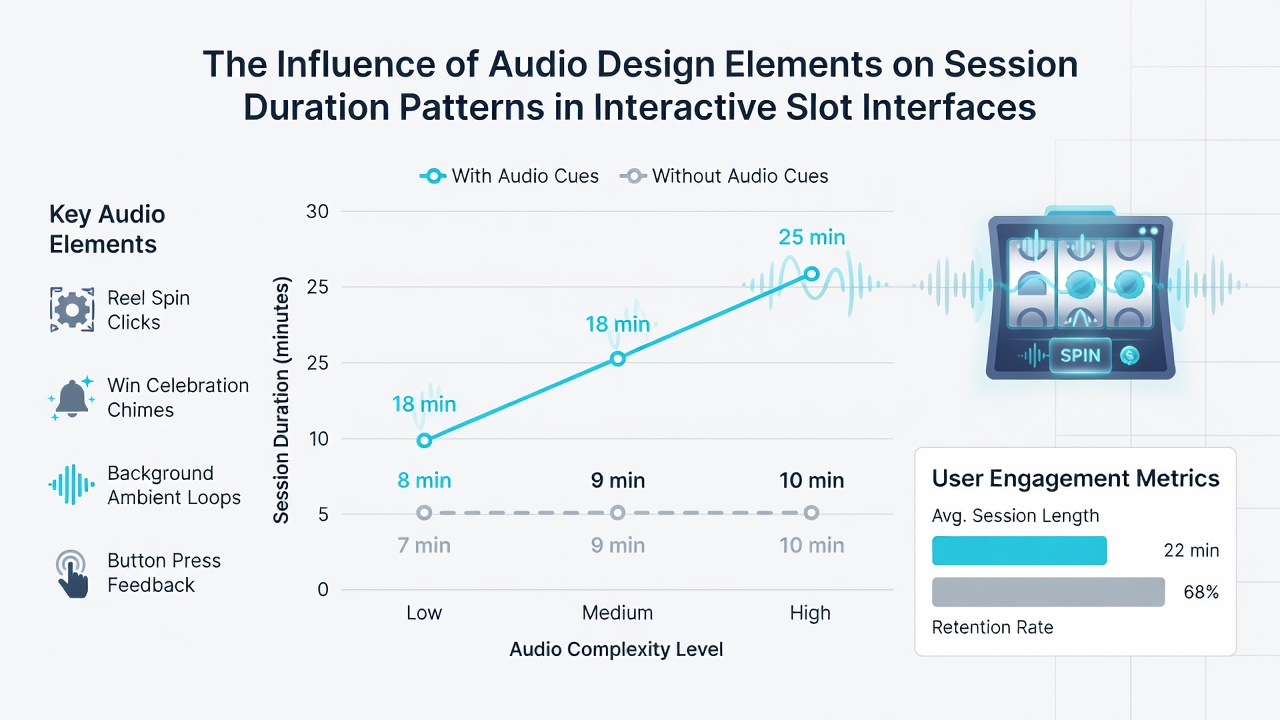
Analytics firms monitoring thousands of user sessions across regulated markets document that interfaces featuring adaptive audio, where sound intensity scales with consecutive wins, produce session durations that average 12-18 minutes longer than static audio versions. These differences appear most clearly in data sets filtered for players who engage with the same title over multiple days. The patterns hold across both desktop and mobile environments, although mobile sessions show slightly greater sensitivity to notification-style win sounds that play at higher volumes.
One analysis covering European and North American operators found that removal of celebratory audio after big wins reduced repeat spin frequency within the same session by noticeable percentages. Conversely, retention of those same sounds maintained spin velocity even after losses, suggesting the audio component functions as a continuity signal independent of monetary outcome. Figures released in mid-2026 continue to reflect these correlations in updated tracking dashboards.
Regional Regulatory Context and Research Sources
Regulatory bodies in multiple jurisdictions require operators to log interface modifications, including audio changes, as part of compliance reporting. The Nevada Gaming Control Board maintains records that link feature updates to player behavior metrics submitted quarterly. Separate reports from the Canadian Gaming Association highlight how audio calibration influences responsible play tool interactions, noting that players using session time reminders respond differently when background tracks remain active versus muted.
Academic papers published through 2025 and into October 2026 examine cross-cultural variations, showing that certain melodic structures common in Asian-market titles extend sessions more effectively for regional users than generic Western sound packs. These findings come from controlled A/B deployments where only audio parameters changed while visual and payout structures stayed constant.
Technical Implementation and Testing Methods
Developers integrate audio assets through middleware that supports dynamic mixing based on game state variables such as current balance, recent win frequency, and time elapsed since last interaction. Testing protocols involve splitting user cohorts into groups exposed to different audio presets while holding other variables steady. Results from these splits reveal that progressive volume increases during bonus accumulation phases produce the strongest extension of session duration across age demographics tracked in the data.
Latency between visual symbol landing and corresponding audio playback also factors into observed patterns. Interfaces maintaining sub-50 millisecond audio-visual sync demonstrate tighter clustering of session lengths around the median, whereas higher latency values associate with more variable exit points. Engineers address these issues through optimized asset compression and device-specific rendering paths that account for hardware differences in mobile chipsets.
Conclusion
Audio design elements in interactive slot interfaces connect directly to documented variations in session duration through measurable feedback mechanisms that operate alongside visual and mechanical features. Platform data aggregated from multiple regulated markets demonstrates consistent relationships between specific sound characteristics and the length of user engagement periods. Continued monitoring by academic and industry groups supplies ongoing evidence that these audio parameters function as independent variables within broader interface systems, allowing operators to refine experiences while meeting compliance standards across jurisdictions.